
Inside the 10.000-Year Clock: Jeff Bezos’ Monument to Time, Legacy, and the Future of Civilization
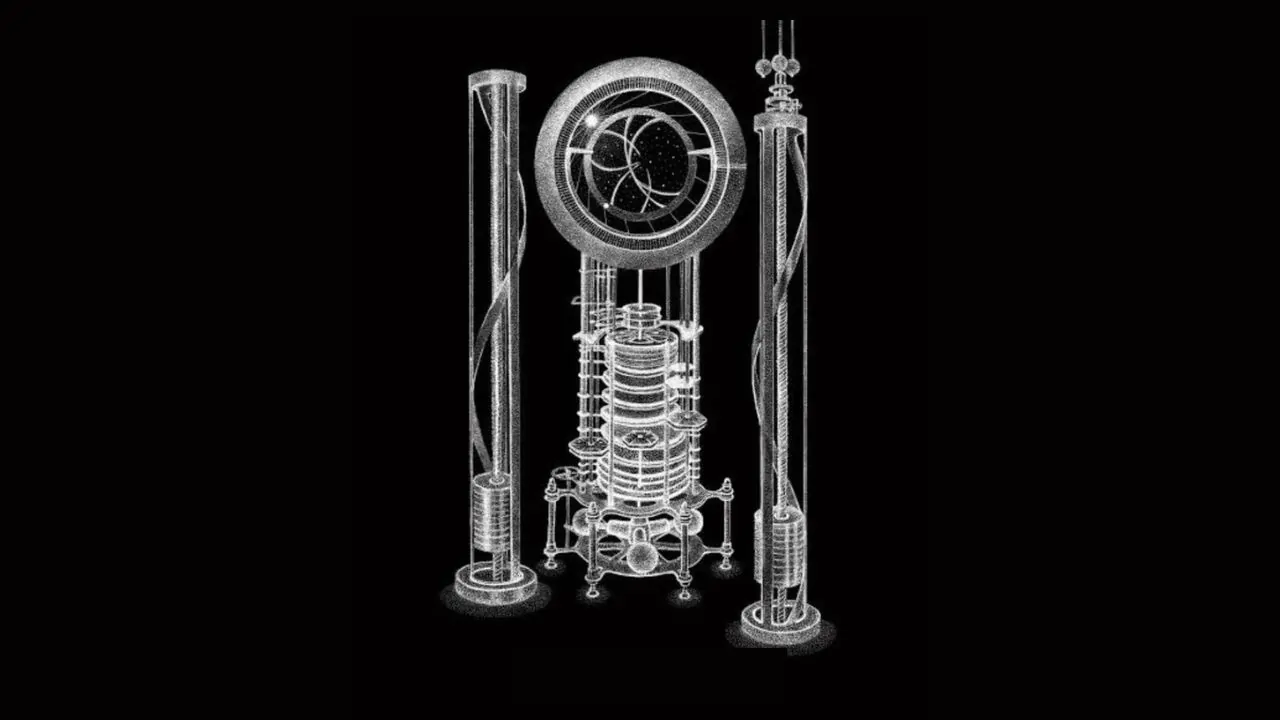
A clock built to last 10,000 years! Not a digital artifact or a cloud-based algorithm but a mechanical masterpiece, hidden deep inside a mountain in Texas, quietly measuring the passage of millennia.
This is the 10,000 Year Clock, also known as the Clock of the Long Now a collaboration between the Long Now Foundation, visionary engineer Danny Hillis, and Jeff Bezos, whose futuristic ambitions extend far beyond space travel and commerce.
At first glance, it might seem like an eccentric billionaire’s monument. But beneath the gears and stone, there’s a deeper idea pulsing: a philosophy of long-term thinking, a challenge to our culture of instant gratification, and a meditation on humanity’s relationship with deep time.
What does it mean to build something that must endure for 10 millennia?
And what does such an act reveal about how we see our place in the timeline of civilization?
The Vision Behind
The Clock of the Long Now was conceived in the 1980s by Danny Hillis, a computer scientist who co-founded Thinking Machines and worked alongside pioneers of artificial intelligence. Hillis grew concerned that society was losing its sense of the future that humanity was optimizing for quarterly profits and viral trends instead of sustainability and legacy.
So he proposed an audacious idea:
“I want to build a clock that ticks once a year. The century hand advances once every 100 years. And the cuckoo comes out on the millennium.”
The idea evolved into the Long Now Foundation, a nonprofit dedicated to fostering long-term responsibility “stretching” human attention from the short now to the long now, the next 10,000 years of human existence.
When Jeff Bezos learned of the project, he offered more than funding he offered a mountain.
Inside the Mountain: Jeff Bezos’ Underground Clock

Hidden within the Sierra Diablo Mountain range in West Texas, the Jeff Bezos underground clock is being carved into the rock like a modern-day time capsule.
The clock stands roughly 500 feet tall, with gears, weights, and chimes designed to operate without human maintenance for thousands of years. It is powered by thermal cycles temperature differences between day and night and human visitors who wind the clock by hand when they make the pilgrimage up the mountain.
Every component must resist decay, corrosion, and entropy. Materials include marine-grade stainless steel, titanium, and stone, chosen for their resilience in extreme environments.
It’s a feat of sustainable engineering for the long term, blending ancient horology with modern precision.
How the 10,000 Year Clock Works
The mechanical clock for the future keeps time using astronomical indicators the sun, stars, and planetary alignments instead of electronics.
Its mechanism is built on several nested cycles:
- 1 tick per year
- 1 century hand movement per century
- 1 chime sequence per millennium
Each time the clock is wound, visitors may hear one of 3.5 million unique chime combinations, never to be repeated a musical fingerprint of human time.
At the top, a solar synchronizer ensures accuracy, using sunlight to recalibrate the clock’s position after long dormant periods. This design embodies the philosophy of slow technology innovation that endures rather than obsoletes.
The Philosophy of Deep Time and Long-Term Thinking
At its core, the Clock of the Long Now is not about timekeeping. It’s about mindkeeping.
By constructing a monument that will outlive nations, languages, and possibly species, the project provokes a reflection: Can we, as a civilization, think beyond our own lifespans?
This is the essence of deep time thinking viewing humanity within the vast geological and cosmic timeline. It’s a concept that blends philosophy, futurism, and ethics, urging us to become ancestors worth remembering.
The Long Now Foundation’s motto, “The future is built by those who care long enough to build for it,” echoes this sentiment. The clock becomes not just an engineering marvel but a moral compass for long-term stewardship.
Jeff Bezos and the Future of Monumental Projects
Bezos’ involvement connects this project to his broader vision of long-term civilization projects from Blue Origin’s mission to colonize space, to Amazon’s culture of relentless innovation.
He described the clock as a “symbol for long-term thinking.” It’s a physical manifestation of the same mindset behind multi-generational enterprises, sustainable engineering, and future heritage monuments.
Much like the pyramids, the cathedrals of Europe, or Stonehenge, the 10,000-Year Clock represents humanity’s urge to build something bigger than itself.
It’s both art and infrastructure. Both relic and prophecy.
Reflections: What Does the Clock Really Measure?
In an age where software updates expire in months, the 10,000-Year Clock challenges the rhythm of innovation.
It belongs to the family of slow innovation examples creations like the Svalbard Global Seed Vault, Gaia spacecraft, or cathedral projects that span centuries. These designs force us to reconsider metrics of success not in profits or patents, but in endurance and meaning.
Building something for 10,000 years is an act of faith in continuity a belief that humanity, in some form, will still be here to hear the chime.
Perhaps, in the end, the Jeff Bezos 10,000-Year Clock doesn’t measure seconds or centuries. It measures mindset.
It asks:
- How far into the future can we care?
- What will our descendants think of us?
- And what does responsibility look like on a civilizational time scale?
The answers are not carved in stone or steel they’re carved in intention.
Conclusion: A Monument to the Long Now
Whether one views it as a futuristic art piece, an engineering experiment, or a philosophical statement, the 10,000-Year Clock remains one of the most thought-provoking projects of our time.
It invites us to slow down. To think beyond quarterly reports and election cycles. To imagine a civilization that values legacy over immediacy. And maybe, just maybe, it reminds us that the true measure of progress is not how fast we move but how far we’re willing to look ahead.
- Are the Magnificent Seven Becoming AI Bubble Companies? A Deep Dive Into the 7 Tech Giants
- Bermuda Triangle: Portal To Another Dimension?
- John Lennon: Was The Beatle's Murder Really The Work Of A Lone Gunman?
- Pump and Dump Explained: How Investors Get Trapped in Market Manipulation Schemes
- Tunguska: What Exploded Over Siberia In 1908 With The Force Of 1,000 Atomic Bombs?